Who is Hanuman: the flying monkey god and
why Phuket's top adventure park bears his name
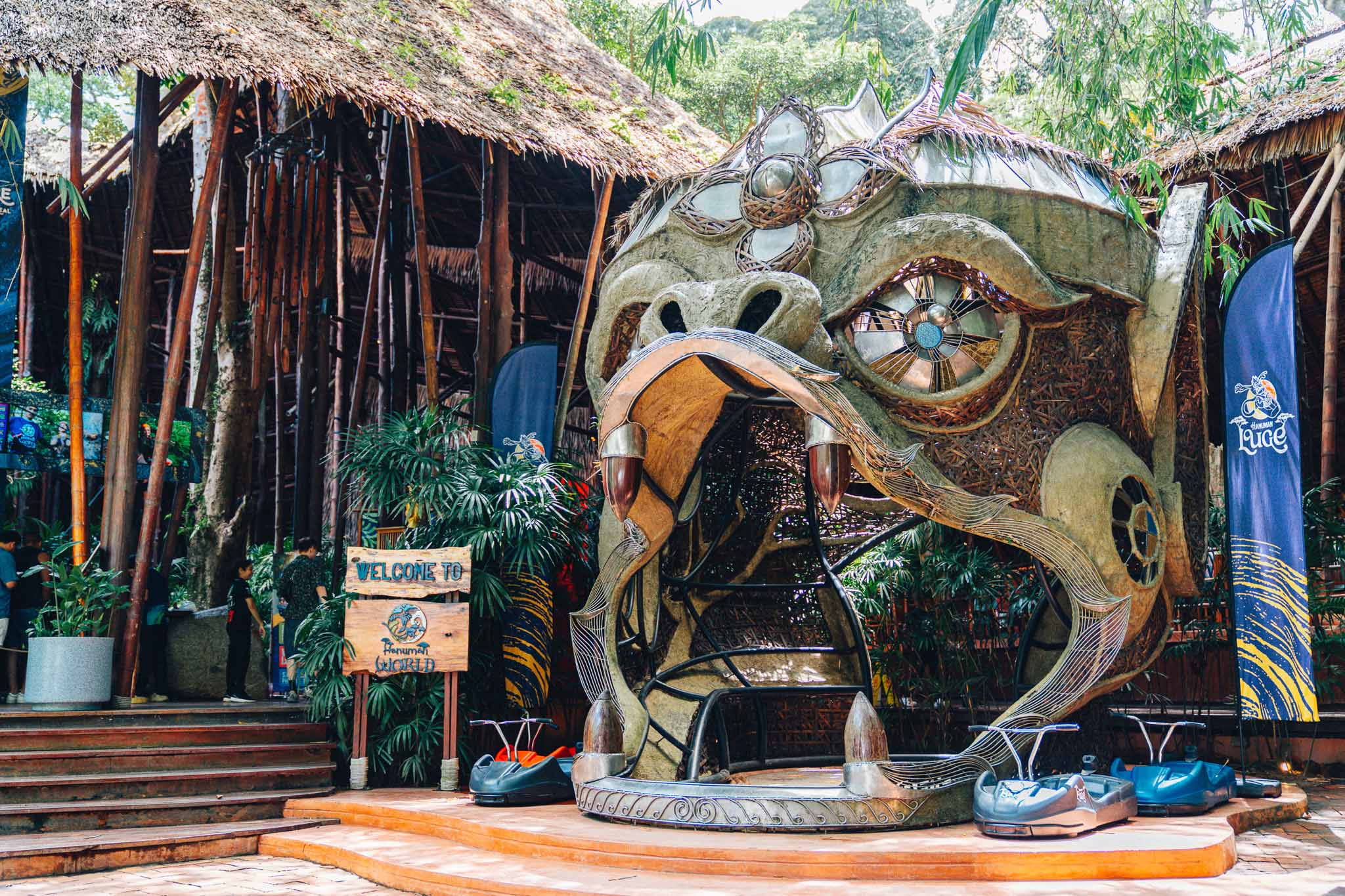
At the entrance to Hanuman World stands a sculpture of a white flying monkey. Most tourists snap a photo and walk on. Yet behind that name lies one of the most gripping stories in world mythology — about a being who could shrink to the size of a fly, grow to the size of a mountain, and leap across an ocean at full sprint.
The Ramayana: where it all began
Hanuman is the central hero of the ancient Indian epic the Ramayana, written around 2,500 years ago. It tells the story of the divine king Rama, whose wife Sita is abducted by the demon Ravana and taken to the distant island of Lanka. To rescue her, Rama needs an army — and that is where Hanuman enters.
By birth, Hanuman is the son of Vayu, the wind god, and a celestial nymph. Hence his defining gift: he can fly. He can also change size at will, possesses extraordinary strength, is immortal, and is remarkably intelligent — the perfect ally for a war against demons.
"Hanuman flew solo across the ocean, located Sita in Ravana's captivity, burned half the demon king's capital with his tail (the demons set it alight themselves — a miscalculation), and returned with his report. All before lunch."
Thai Hanuman: a little different
The Ramayana arrived in Thailand from India roughly a thousand years ago and gradually became the national epic — here known as the Ramakien (รามเกียรติ์). Murals depicting its scenes line every wall of the gallery surrounding the Temple of the Emerald Buddha in Bangkok — a comic strip almost a kilometre long.
Thai Hanuman differs from his Indian counterpart in one key detail: he is white. In Thai tradition white symbolises purity, sanctity and power. The Thai Hanuman is also somewhat more playful and not averse to romantic adventures — which only adds to his popularity.
Why Thais love him
In Thailand, Hanuman is far more than a religious figure. Sports clubs, naval vessels and Muay Thai gyms bear his name. Hanuman amulets are among the most common in the country — he is believed to protect against danger and bestow strength in difficult moments.
In the classical Thai dance-drama Khon (UNESCO Intangible Cultural Heritage), Hanuman is one of the principal characters. His mask: white, crowned, bared teeth. If you see one in a souvenir shop, that's the one.
What does this have to do with a zipline?
The park's founders chose the name deliberately. Hanuman represents:
Flight. He literally flies — and the zipline recreates exactly that sensation: gliding over the jungle canopy like the wind god himself.
The jungle. Hanuman spends much of the Ramayana in the forest — it is his natural domain.
Fearlessness. He leaps into the unknown without hesitation. That is precisely what the park expects of you at the first platform.
Protection. In Thai tradition, Hanuman is a guardian. A park bearing his name places special emphasis on safety.
Where else to find Hanuman in Thailand
Bangkok, Wat Phra Kaeo. The Ramakien gallery encircling the temple — the full story in pictures, all of Hanuman's exploits. Entry with a Grand Palace ticket.
Thai amulets. At any market, in the amulet section, you will find a white flying monkey — carried for luck and protection while travelling.
Khon dance. Traditional performances are held at several Bangkok theatres. Hanuman is technically the most demanding role.
Phuket, Hanuman World. Where you can do more than read about the wind god's flight — you can feel it at full speed.
Читают дальше
U TOUR
Who is Hanuman: the flying monkey god and
why Phuket's top adventure park bears his name
At the entrance to Hanuman World stands a sculpture of a white flying monkey. Most tourists snap a photo and walk on. Yet behind that name lies one of the most gripping stories in world mythology — about a being who could shrink to the size of a fly, grow to the size of a mountain, and leap across an ocean at full sprint.
The Ramayana: where it all began
Hanuman is the central hero of the ancient Indian epic the Ramayana, written around 2,500 years ago. It tells the story of the divine king Rama, whose wife Sita is abducted by the demon Ravana and taken to the distant island of Lanka. To rescue her, Rama needs an army — and that is where Hanuman enters.
By birth, Hanuman is the son of Vayu, the wind god, and a celestial nymph. Hence his defining gift: he can fly. He can also change size at will, possesses extraordinary strength, is immortal, and is remarkably intelligent — the perfect ally for a war against demons.
"Hanuman flew solo across the ocean, located Sita in Ravana's captivity, burned half the demon king's capital with his tail (the demons set it alight themselves — a miscalculation), and returned with his report. All before lunch."
Thai Hanuman: a little different
The Ramayana arrived in Thailand from India roughly a thousand years ago and gradually became the national epic — here known as the Ramakien (รามเกียรติ์). Murals depicting its scenes line every wall of the gallery surrounding the Temple of the Emerald Buddha in Bangkok — a comic strip almost a kilometre long.
Thai Hanuman differs from his Indian counterpart in one key detail: he is white. In Thai tradition white symbolises purity, sanctity and power. The Thai Hanuman is also somewhat more playful and not averse to romantic adventures — which only adds to his popularity.
Why Thais love him
In Thailand, Hanuman is far more than a religious figure. Sports clubs, naval vessels and Muay Thai gyms bear his name. Hanuman amulets are among the most common in the country — he is believed to protect against danger and bestow strength in difficult moments.
In the classical Thai dance-drama Khon (UNESCO Intangible Cultural Heritage), Hanuman is one of the principal characters. His mask: white, crowned, bared teeth. If you see one in a souvenir shop, that's the one.
What does this have to do with a zipline?
The park's founders chose the name deliberately. Hanuman represents:
Flight. He literally flies — and the zipline recreates exactly that sensation: gliding over the jungle canopy like the wind god himself.
The jungle. Hanuman spends much of the Ramayana in the forest — it is his natural domain.
Fearlessness. He leaps into the unknown without hesitation. That is precisely what the park expects of you at the first platform.
Protection. In Thai tradition, Hanuman is a guardian. A park bearing his name places special emphasis on safety.
Where else to find Hanuman in Thailand
Bangkok, Wat Phra Kaeo. The Ramakien gallery encircling the temple — the full story in pictures, all of Hanuman's exploits. Entry with a Grand Palace ticket.
Thai amulets. At any market, in the amulet section, you will find a white flying monkey — carried for luck and protection while travelling.
Khon dance. Traditional performances are held at several Bangkok theatres. Hanuman is technically the most demanding role.
Phuket, Hanuman World. Where you can do more than read about the wind god's flight — you can feel it at full speed.
U TOUR
POINT OF TRUE LEISURE CO., LTD.