Elephants in Phuket: ethical
or not — an honest 2026 guide
“Riding an elephant” is one of the most requested activities in Phuket, and one of the most controversial. The truth is that camps on the island work very differently: at some, retired elephants walk and bathe; at others, people still ride on their backs. Below is the honest difference, the four places we sell ourselves with prices and programmes, and the signs that give a bad camp away in a minute.
Why elephant riding became a problem
Elephants are not riding animals. To carry people calmly they are trained from a young age, and that training is rarely gentle. World Animal Protection has advised against riding since 2019 and the big international tour operators have dropped it from their programmes. This is not a fashion: riding is bad for the animal’s back and for the life the elephant leads afterwards.
At the same time, you won’t see a truly “wild” elephant in Phuket: the island is small, and the elephants here are working animals, often from the logging industry, where their labour was banned back in 1989. The question is not whether they live with people, but how.
Pai Lin’s story
Pai Lin is 75, and she worked for people for about 60 of those years: hauling logs, begging on city streets, then 25 years carrying tourists — up to six at a time. Her spine, which in an elephant rises in a ridge, has collapsed inward. Saddle scars are still visible on her skin. In 2006 she was bought out by WFFT and now lives with other rescued elephants near Hua Hin.
The good news: in 2010, 92% of elephants in Thai tourism were used for rides; by 2024 it was 43%. Travellers who choose no-riding camps are changing the market.
What an ethical camp looks like
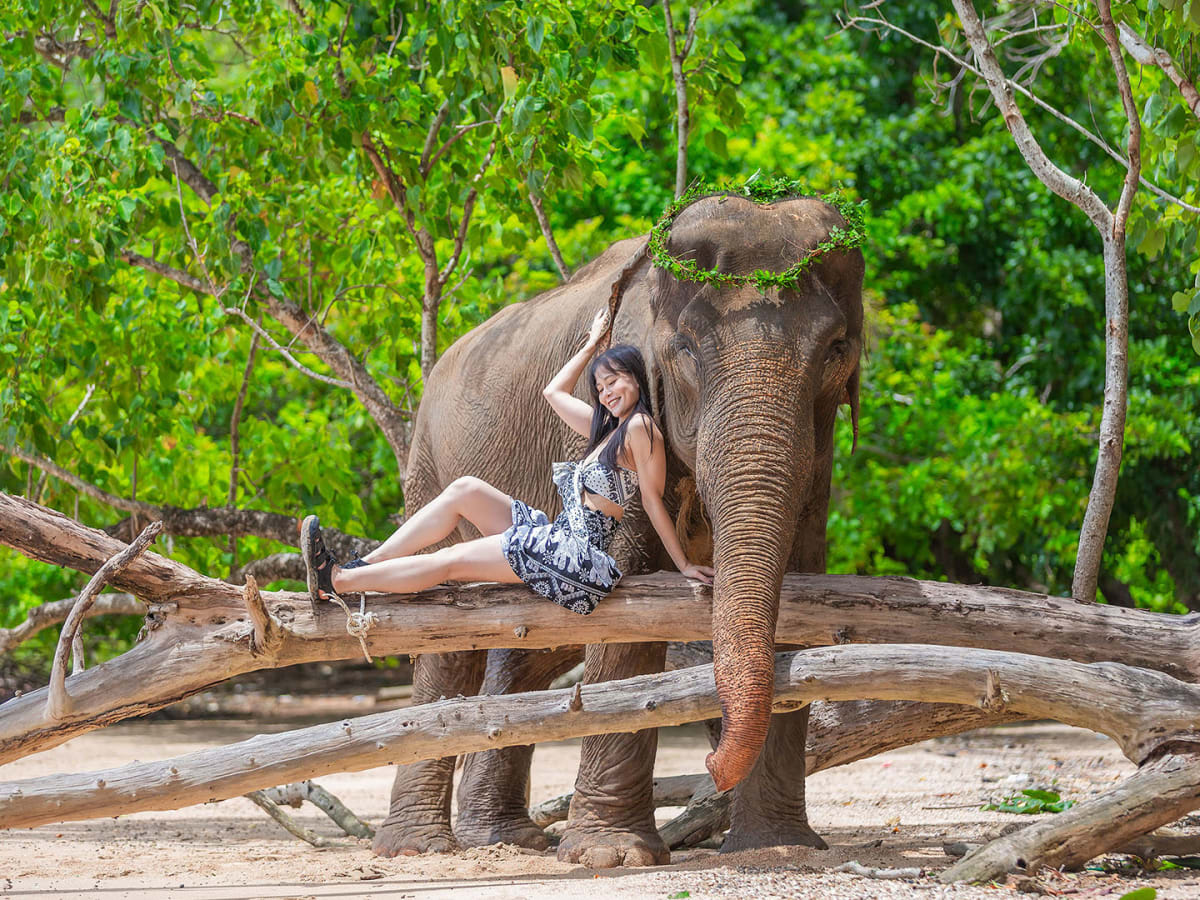
The elephants walk on their own instead of standing chained waiting for tourists. The keeper knows each animal’s story and tells it. No metal hooks in anyone’s hands. Contact is through food: you cut fruit and sugar cane, feed by hand, walk alongside, and if the elephant goes into the water itself, you bathe next to it. No riding in any form, not on the neck, not in a basket.
“An elephant that comes up for a banana and then wanders off on its own business is a completely different experience from a tired animal with a person on its back.”
The four places we sell
Elephant Conservation Phuket — a sanctuary in the north of the island. Sisunthon area, half a day from 08:30 to 13:00. The basic programme is observing and feeding, no bathing, 2,000 ฿ per adult and 1,500 ฿ per child aged 4–11, transfer and insurance included. The EC2 “half day with the giants” programme adds a walk, bathing and lunch — 2,900 ฿. The most sanctuary-like format of the four.
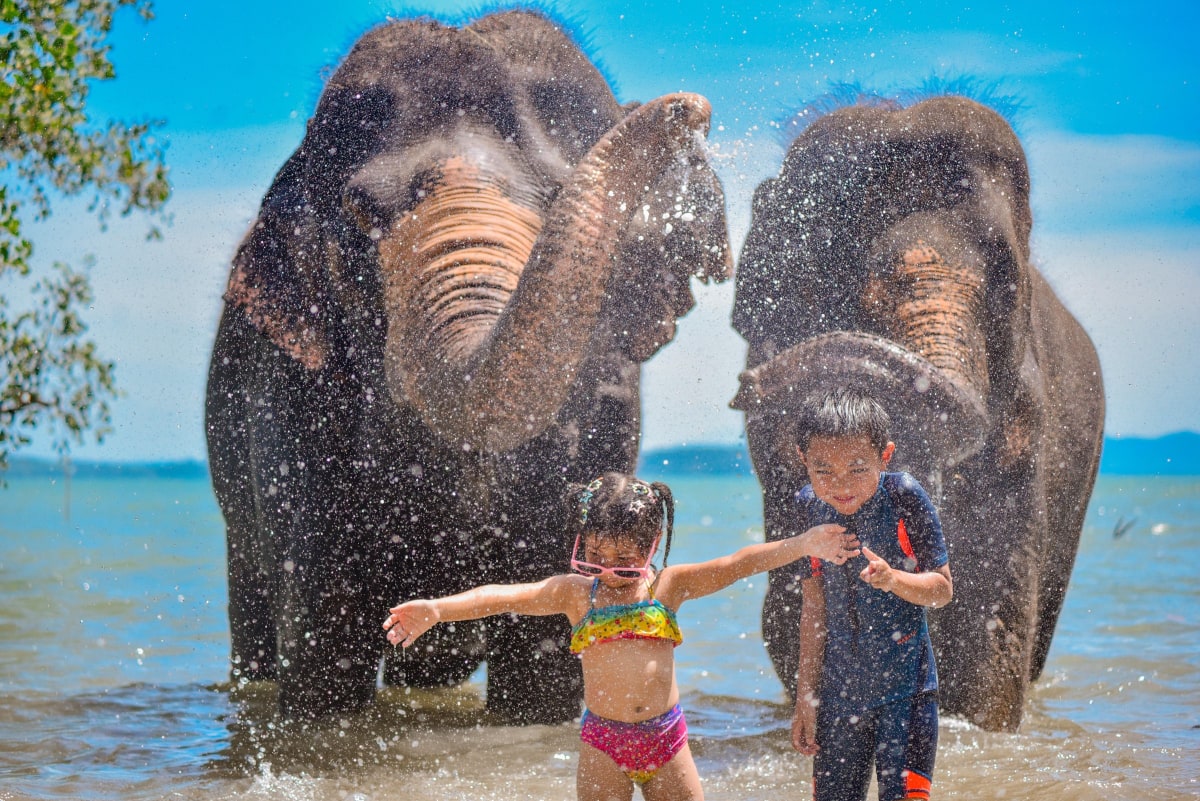
See the tour →Siray Elephant Care Camp — elephant care on the beach. The only camp with a sea view: retired elephants, no riding, no shows. Three programmes: feeding, a “rain shower” and bathing on a private beach. The shortest is from 900 ฿, but without transfer. Feed & Bathe with bathing, transfer, fruit and a café is 1,900 ฿. A good choice with children: close, short, and somewhere to sit.
See the tour →Chalong Elephant Park. A retirement park in the south of the island: bathing, feeding, a mud spa. The basic programme is 2,000 ฿ (children aged 4–10 — 1,800 ฿), half a day with bathing, spa and a buffet is 2,600 ฿, and a full day with elephants plus Chalong temple, Big Buddha and the cashew and pearl factories is 3,800 ฿. Transfer from Patong, Karon, Kata, Rawai and Chalong is included.
See the tour →Lily Elephant Camp — elephants by the sea. Roll vitamin balls for the elephants, feed them and give them a “rain” shower. Coffee and snacks, insurance and hotel transfer included. From 45 minutes to 4 hours, from 1,800 ฿.
See the tour → All no-riding elephant camps →What about the camp in Patong?
There is a camp a short walk from the Patong hotels, but it offers rides. We no longer sell it. If you want something close and short, go to Siray: 15 minutes from the Old Town, its own beach, no riding.
How to choose
Short on time, travelling with kids. Siray: one and a half to three hours, a beach, a café, from 900 ฿.
You want a “real” sanctuary. Elephant Conservation in the north: the EC2 programme with bathing and lunch at 2,900 ฿.
A full day, and more than elephants. Chalong with the temple and Big Buddha at 3,800 ฿, or Khao Lak with jungle and a waterfall at 1,800 ฿.
Budget under 2,000 ฿. Siray, Khao Lak or the basic Elephant Conservation programme. All three without riding.
Red flags: how to spot a bad place
People sitting on the elephant’s neck or back. Metal hooks in the handlers’ hands. An elephant in a small pen on a short chain. An elephant “painting”, playing a harmonica or doing a handstand — that is a circus, not care. If you see even one of these, turn around. The same goes for a camp that promises “bathing” in a concrete pool the size of a bathtub.
What to bring
Clothes you don’t mind ruining: elephants splash water and mud, and so will you. A spare T-shirt and shoes that can be washed. Repellent, sunscreen, water. A phone in a case: bananas are sticky and an elephant’s trunk is curious.
FAQ
From what age can children come? Usually from 4, with a child fare up to 10–11 depending on the camp. Children approach the elephants only with a keeper.
Can you bathe with the elephants? Yes — at Siray, Chalong, Khao Lak and in the sanctuary’s EC2 programme. The elephant walks into the water itself, you stand alongside and pour water over it from a bucket. It is bathing, not riding through a river.
How long does it take? From an hour and a half at Siray to a full day in Khao Lak or Chalong. The most common choice is half a day.
Is the transfer included? In every programme except the shortest one at Siray. Distant areas may carry a surcharge — we tell you before booking.
Are the elephants local? Mostly working elephants from the mainland, now retired. Each has a name and a story, and the keeper will tell it.

Читают дальше

U TOUR

Elephants in Phuket: ethical
or not — an honest 2026 guide
“Riding an elephant” is one of the most requested activities in Phuket, and one of the most controversial. The truth is that camps on the island work very differently: at some, retired elephants walk and bathe; at others, people still ride on their backs. Below is the honest difference, the four places we sell ourselves with prices and programmes, and the signs that give a bad camp away in a minute.
Why elephant riding became a problem
Elephants are not riding animals. To carry people calmly they are trained from a young age, and that training is rarely gentle. World Animal Protection has advised against riding since 2019 and the big international tour operators have dropped it from their programmes. This is not a fashion: riding is bad for the animal’s back and for the life the elephant leads afterwards.
At the same time, you won’t see a truly “wild” elephant in Phuket: the island is small, and the elephants here are working animals, often from the logging industry, where their labour was banned back in 1989. The question is not whether they live with people, but how.
Pai Lin’s story
Pai Lin is 75, and she worked for people for about 60 of those years: hauling logs, begging on city streets, then 25 years carrying tourists — up to six at a time. Her spine, which in an elephant rises in a ridge, has collapsed inward. Saddle scars are still visible on her skin. In 2006 she was bought out by WFFT and now lives with other rescued elephants near Hua Hin.
The good news: in 2010, 92% of elephants in Thai tourism were used for rides; by 2024 it was 43%. Travellers who choose no-riding camps are changing the market.
What an ethical camp looks like
The elephants walk on their own instead of standing chained waiting for tourists. The keeper knows each animal’s story and tells it. No metal hooks in anyone’s hands. Contact is through food: you cut fruit and sugar cane, feed by hand, walk alongside, and if the elephant goes into the water itself, you bathe next to it. No riding in any form, not on the neck, not in a basket.
“An elephant that comes up for a banana and then wanders off on its own business is a completely different experience from a tired animal with a person on its back.”
The four places we sell
Elephant Conservation Phuket — a sanctuary in the north of the island. Sisunthon area, half a day from 08:30 to 13:00. The basic programme is observing and feeding, no bathing, 2,000 ฿ per adult and 1,500 ฿ per child aged 4–11, transfer and insurance included. The EC2 “half day with the giants” programme adds a walk, bathing and lunch — 2,900 ฿. The most sanctuary-like format of the four.
See the tour →Siray Elephant Care Camp — elephant care on the beach. The only camp with a sea view: retired elephants, no riding, no shows. Three programmes: feeding, a “rain shower” and bathing on a private beach. The shortest is from 900 ฿, but without transfer. Feed & Bathe with bathing, transfer, fruit and a café is 1,900 ฿. A good choice with children: close, short, and somewhere to sit.
See the tour →Chalong Elephant Park. A retirement park in the south of the island: bathing, feeding, a mud spa. The basic programme is 2,000 ฿ (children aged 4–10 — 1,800 ฿), half a day with bathing, spa and a buffet is 2,600 ฿, and a full day with elephants plus Chalong temple, Big Buddha and the cashew and pearl factories is 3,800 ฿. Transfer from Patong, Karon, Kata, Rawai and Chalong is included.
See the tour →Lily Elephant Camp — elephants by the sea. Roll vitamin balls for the elephants, feed them and give them a “rain” shower. Coffee and snacks, insurance and hotel transfer included. From 45 minutes to 4 hours, from 1,800 ฿.
See the tour → All no-riding elephant camps →What about the camp in Patong?
There is a camp a short walk from the Patong hotels, but it offers rides. We no longer sell it. If you want something close and short, go to Siray: 15 minutes from the Old Town, its own beach, no riding.
How to choose
Short on time, travelling with kids. Siray: one and a half to three hours, a beach, a café, from 900 ฿.
You want a “real” sanctuary. Elephant Conservation in the north: the EC2 programme with bathing and lunch at 2,900 ฿.
A full day, and more than elephants. Chalong with the temple and Big Buddha at 3,800 ฿, or Khao Lak with jungle and a waterfall at 1,800 ฿.
Budget under 2,000 ฿. Siray, Khao Lak or the basic Elephant Conservation programme. All three without riding.
Red flags: how to spot a bad place
People sitting on the elephant’s neck or back. Metal hooks in the handlers’ hands. An elephant in a small pen on a short chain. An elephant “painting”, playing a harmonica or doing a handstand — that is a circus, not care. If you see even one of these, turn around. The same goes for a camp that promises “bathing” in a concrete pool the size of a bathtub.
What to bring
Clothes you don’t mind ruining: elephants splash water and mud, and so will you. A spare T-shirt and shoes that can be washed. Repellent, sunscreen, water. A phone in a case: bananas are sticky and an elephant’s trunk is curious.
FAQ
From what age can children come? Usually from 4, with a child fare up to 10–11 depending on the camp. Children approach the elephants only with a keeper.
Can you bathe with the elephants? Yes — at Siray, Chalong, Khao Lak and in the sanctuary’s EC2 programme. The elephant walks into the water itself, you stand alongside and pour water over it from a bucket. It is bathing, not riding through a river.
How long does it take? From an hour and a half at Siray to a full day in Khao Lak or Chalong. The most common choice is half a day.
Is the transfer included? In every programme except the shortest one at Siray. Distant areas may carry a surcharge — we tell you before booking.
Are the elephants local? Mostly working elephants from the mainland, now retired. Each has a name and a story, and the keeper will tell it.
U TOUR
POINT OF TRUE LEISURE CO., LTD.